11 Psychological Style Tricks That Make You Look Put Together
Have you ever noticed how two women can wear almost identical outfits, yet one just looks… better?
It’s not about the clothes themselves. It’s about understanding the subtle psychological tricks that make certain outfits stand out. These aren’t complicated styling rules or expensive wardrobe overhauls. They’re simple visual principles that change how people perceive you the moment they see you.
And here’s the thing, if you’re not using these tricks, you’re missing what actually makes the difference between looking okay and looking effortlessly stylish.
This guide walks you through the psychological styling tricks that make you look put together, attractive, confident, and polished without spending a single dollar on new clothes.
How Color Psychology Can Help You Style Better
One of the most powerful styling tips to look more put together is understanding color psychology. Colors literally change how people perceive you before you even speak.
This isn’t subjective. It’s how human brains are wired. Every color carries a specific emotional signal, and our brains process that information instantly and subconsciously.
Red can make you come across as more confident and powerful. It’s one reason red is often used in power dressing and evening wear. Navy blue can make you come across as trustworthy and capable. It’s softer than black but still has an authoritative feel.
Soft blues and neutrals like beige, cream, and warm grey can make you seem more approachable and friendly.
How to Use Color Psychology in Outfits

This is one of the simplest ways to look more put together without effort. Instead of choosing colors based on what you feel like wearing that morning, start matching your colors to the situation and the impression you want to create.
In a professional setting where you want to be taken seriously, navy can help create a competent and trustworthy impression. For a first date or social event where you want to stand out, red or burgundy can draw attention and create a confident impression.
If it’s a casual meeting, go for soft blues, warm neutrals, or earth tones as they create a friendly impression.
Think about it this way. Color psychology is used everywhere in marketing. The colors on the packaging of that snack you picked up yesterday weren’t random. They were chosen to catch your attention and influence how you perceive the product.
The colors were mindfully chosen to attract you, and make you feel hungry.
Your outfit works the same way. Color is your cheat code for how to look confident through clothing without saying a word.
The Contrast Effect: How to Match Outfits With Your Features
This is one of those styling tricks that make you look better and most women don’t even know it exists.
Some women have high-contrast features. Maybe it’s the contrast between your hair color and your skin tone. Or the striking eyes or your features just naturally stands out.
Others have softer features where their hair, skin, and eyes have less contrast and blend together more naturally.
Neither is better. They just work differently with clothes.
How to Use Contrast in Your Outfits
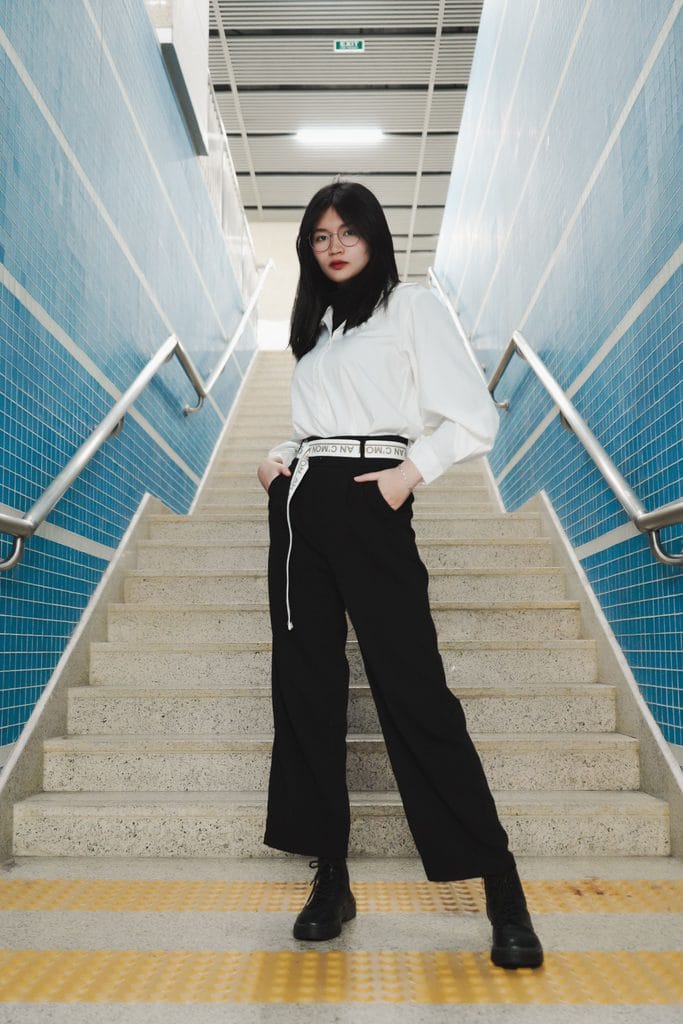
If your features are naturally high-contrast, meaning elements stand out sharply against each other, lean into that. Wear colors that also have contrast.
- Black and white together
- Navy and cream
- Dark and light combinations
When your outfit matches your natural contrast level, it supports your features instead of competing with them.
If your features are softer and have less contrast, choose outfits with softer color combinations too.
- Colors from the same family, like different shades of blue
- Tonal combinations where the colors are similar in lightness or darkness
- Monochrome looks with different textures
When your outfit matches your natural contrast level, your face becomes the focal point. Your clothes stop competing for attention and start supporting you instead.
The Proportion Illusion: How to Look Taller with the Right Outfits
This trick works by changing how your proportions appear.
Your eyes naturally follow lines. Vertical lines make you look taller. Horizontal lines make you look wider. And where your clothes hit your body creates visual stopping points that change how your proportions are perceived.
High Waist vs Low Waist Styling
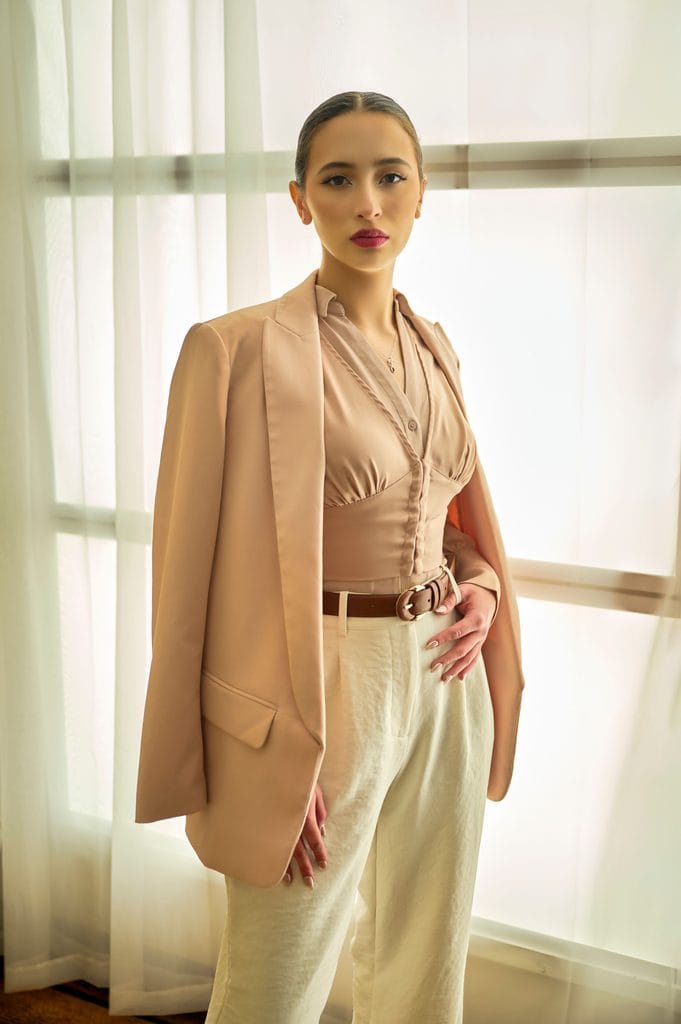
High-waisted pants and skirts move the stopping point up on your body. This makes your legs look longer because the visual break happens higher. Even if you’re petite, high-waisted bottoms create the illusion of length.
Cropped jackets do the same thing. They end above your natural waist, which elongates everything below.
Low-rise jeans do the opposite. They cut you in half visually by creating a stopping point at the widest part of your hips. That’s why low-rise jeans make almost everyone look shorter and wider, regardless of body type.
This is an important styling advice for how to dress for your body proportions. It’s not about your actual height or shape. It’s about where the visual breaks happen in your outfit.
Wearing one color from head to toe removes stopping points entirely. Your eye travels straight up and down in one uninterrupted line, which makes you appear taller instantly.
The Symmetry Effect: How to Balance Outfits Properly
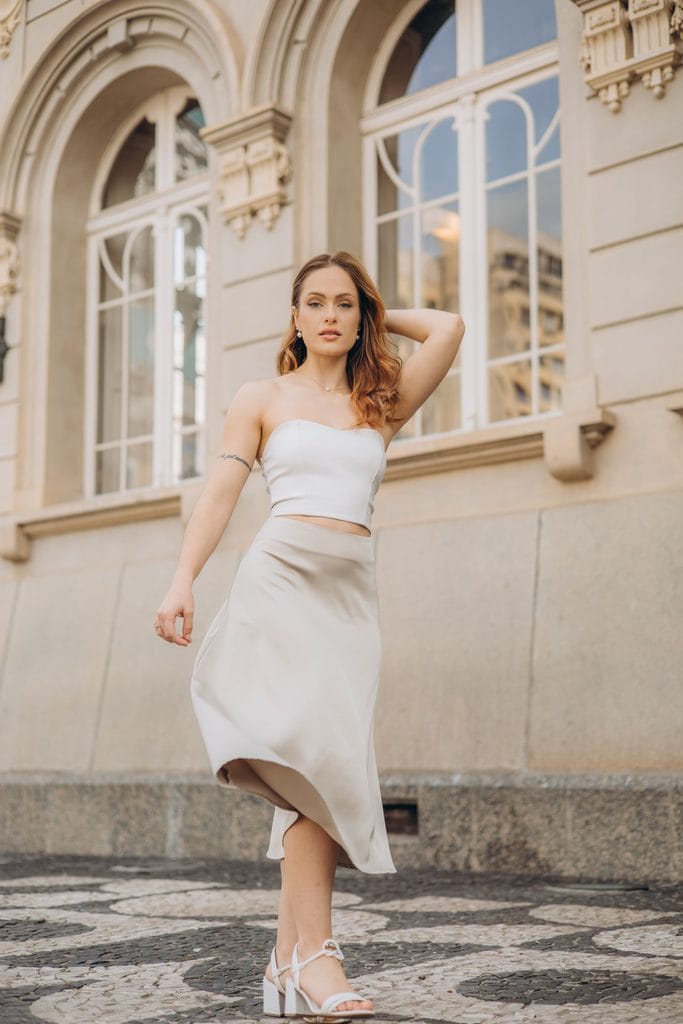
Our eyes naturally find balance appealing. This is why certain outfit combinations look right while others feel off, even when you can’t explain why.
A simple rule is to balance loose clothes with something fitted or structured.
If your top is loose and oversized, your bottom should be fitted or structured. If you wear something like wide-leg pants, tuck your shirt in or wear a cropped top.
And if your pants are baggy, your top should be fitted or tucked to show your waist.
This creates balance. When someone looks at you, their brain registers the outfit as well-thought-out instead of haphazard.
This is one of the easiest ways to make a simple outfit look good. Balance costs nothing but transforms how well balanced your outfit appears.
The Attention Control Rule: How to Accessorize Without Overdoing It
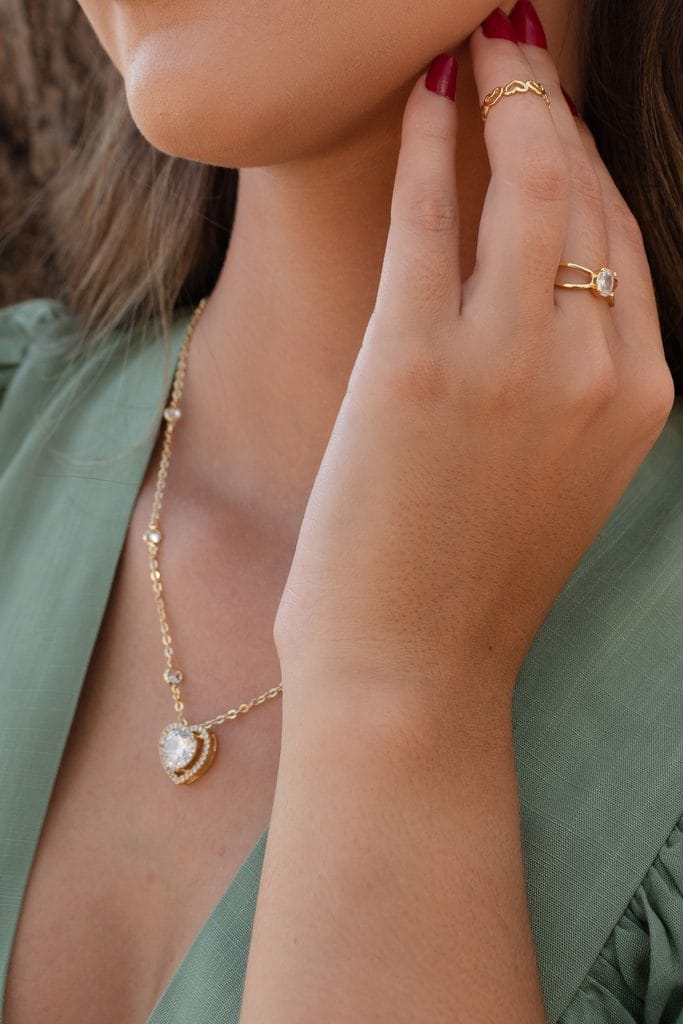
Here’s where most women go wrong. You think more accessories equals better styling. It doesn’t work like that.
When someone looks at you, too many competing accessories make it harder for their brain to process what they’re seeing. Instead of focusing on you, their attention fragments across your earrings, necklace, bracelets, rings, belt, and bag.
Nothing stands out. Everything competes. The overall effect is chaotic rather than elegant.
How to Style Accessories
Pick one statement piece per outfit and let it stand out. Keep everything else simple.
- If you’re wearing bold earrings, skip the necklace
- Statement necklace, keep earrings small and simple
- Interesting belt or bag, minimize other jewelry.
Or go with two subtle, complementary pieces that work together without fighting for attention.
This simple approach makes a huge difference. When your accessories aren’t competing for attention, people notice you instead of your jewelry.
Texture Perception: What Fabrics Look Cheap vs Expensive
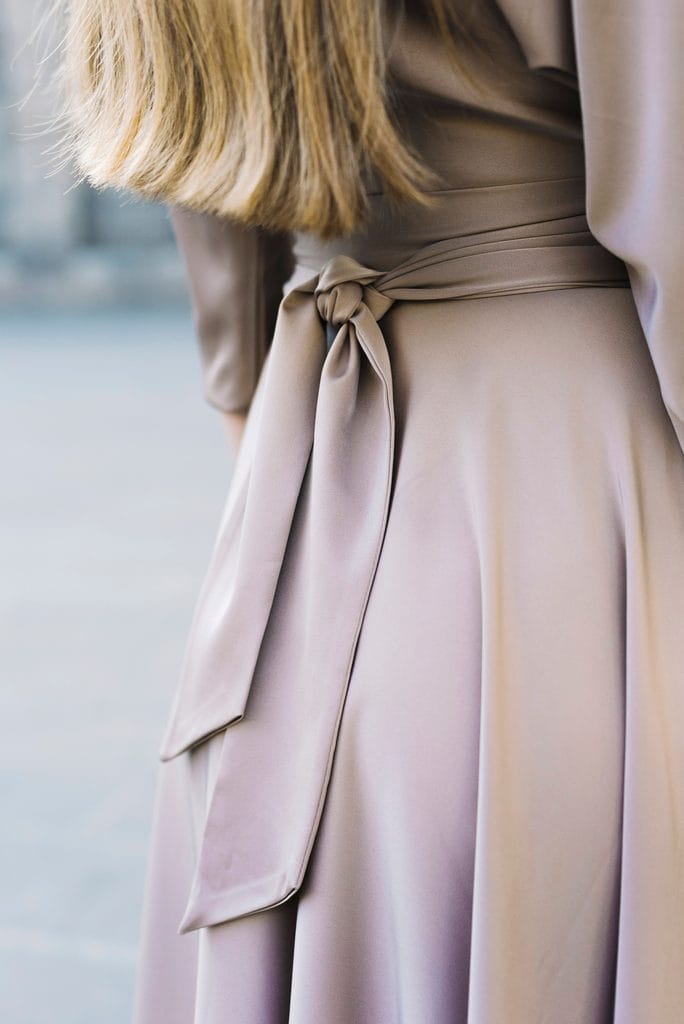
This might sound harsh, but it’s true; fabric quality decides whether something looks expensive or cheap.
If your outfit doesn’t hold its shape, wrinkles the moment you sit down, clings in unflattering places, or has that shiny polyester finish under light, it’s going to look cheap no matter how much you paid for it.
How to Choose the Right Fabric for Clothes
Fabrics that look expensive:
- Matte finishes
- Structured materials that hold their shape (ponte knit, cotton twill, wool blends)
- Natural fabrics or high-quality synthetics that drape well
- Fabrics with a bit of weight and substance
Fabrics that look cheap:
- Shiny, plasticky polyester
- Thin, clingy materials that show every line
- Fabrics that wrinkle very easily
- Fabric that pills or quickly lose their shape
You could spend $200 on a garment, but if the fabric looks cheap, the outfit can still look inexpensive. On the other hand, a $40 outfit with a good matte finish and some structure can look much more expensive than it is.
This is one of the most overlooked fashion tips that make you look expensive, investing in better fabrics, not just more clothes.
The Body Language Effect: How Posture Affects Your Style
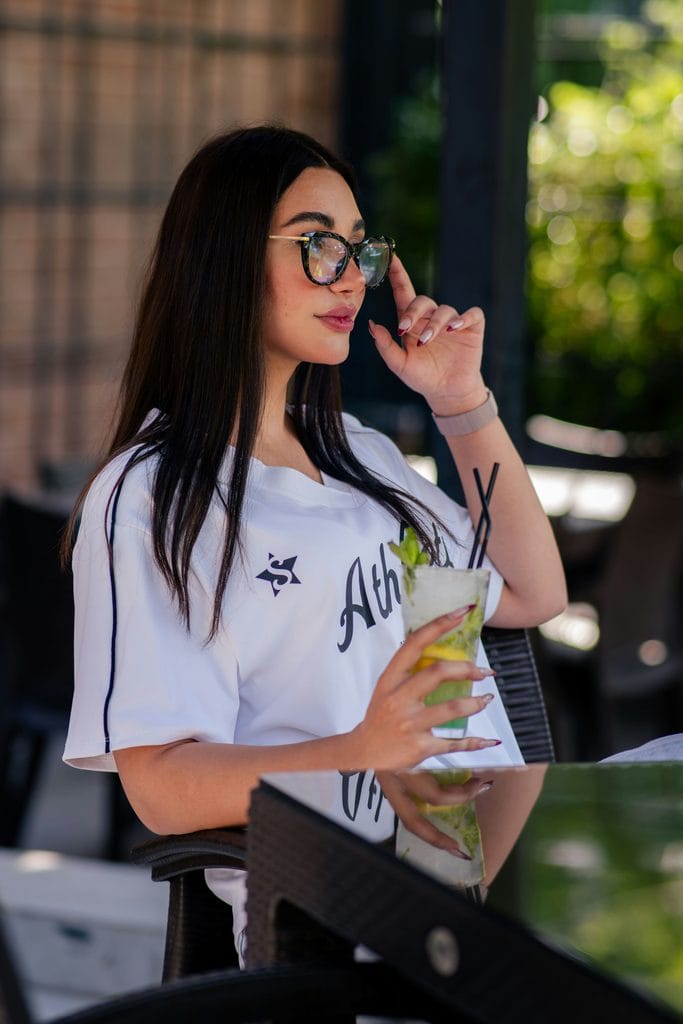
Posture overrides almost everything else in your outfit.
You can wear the most expensive, perfectly styled outfit, but if you’re slouching, looking down, fidgeting with your clothes, or walking hesitantly, the entire look falls apart. It reads as uncomfortable and unsure.
How to Look Confident Instantly
But when you stand tall with your shoulders back and walk with confidence, the perception changes.
Your posture is a psychological signal that people process before they even register what you’re wearing. Confident body language makes people assume everything about you is put-together, even if your outfit is just jeans and a t-shirt.
Fix your posture first. Everything else improves from there.
Stand tall. Pull your shoulders back slightly. Walk with purpose. Make eye contact. These small adjustments cost nothing but make you look like you spent significantly more effort on your appearance than you actually did.
The Halo Effect: Grooming Tips to Look Put Together
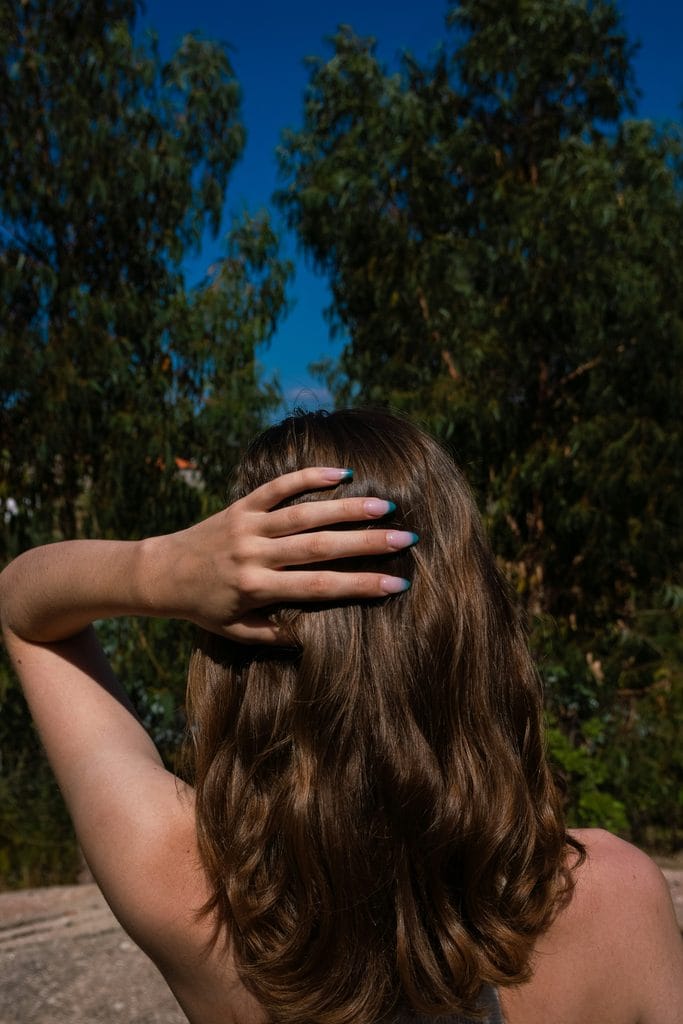
Your face is one of the first things people notice, so grooming can affect how the rest of your outfit comes across.
So if your hair looks messy, your nails are chipped, your brows are unkempt, and you generally look like you just rolled out of bed, it sets the tone for how everything else is perceived. Even if your outfit is great, the overall impression will be negative.
This is called the halo effect in psychology. When one part of your appearance looks well cared for, it can influence how people perceive the rest of your look. The same works in reverse, when one element looks neglected, it drags down the perception of everything else.
Grooming Tips to Look Put Together
You don’t need a full glam routine. Just hit these basics:
- Hair: Whether you wear it down or tie it back, make sure it looks neat. If you have a lot of baby hair, use a small amount of gel or a brush to smooth them down.
- Nails: They don’t need to be professionally done. Just keep them clean, shaped, and free of chipped polish. Bare nails in good condition look better than chipped polish.
- Face: Keep your skin clean and your brows groomed. If you wear makeup, keep it fresh and free of smudges.
When these basic grooming details are taken care of, you overall look great without even changing anything else.
Visual Flow: How to Create a Polished Look With Monochrome Outfits
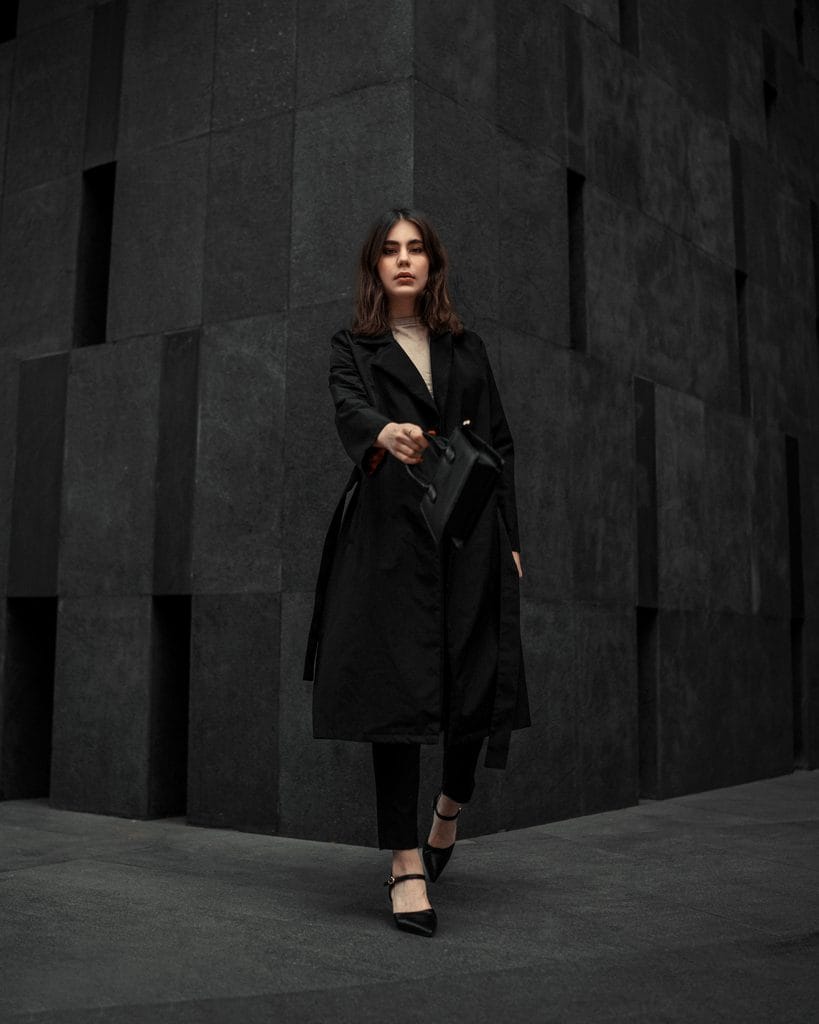
When you wear one color family from head to toe, there are fewer visual breaks for the eye to process. This creates a continuous line from top to bottom, which can make you appear taller and give the outfit a cleaner look.
How to Style Monochrome Outfits
You don’t have to wear the exact same shade. Just stay within the same color family.
- Light beige top, camel trousers, tan shoes
- Navy shirt, medium blue pants, white sneakers
- Grey sweater, charcoal pants, black loafers
The key to making monochrome interesting by adding different textures so the outfit doesn’t look flat. Let me give you a few examples:
- Silk blouse with wool pants
- Cotton t-shirt with a leather jacket
- Knit sweater with structured trousers
This approach makes it easy to create a simple, elegant outfit without overthinking it. Monochrome dressing reduces visual clutter and can make even basic outfits look great.
The Novelty Effect: How One Standout Detail Can Elevate Your Outfit
Our brains are wired to notice what grabs attention first. One standout detail makes an outfit memorable and interesting. But when everything is competing for attention, it becomes overwhelming and chaotic.
The rule is to pick one thing to stand out and let everything else stay simple.
You could wear:
- Bold red shoes with an all-black outfit
- A printed scarf with neutral basics
- Statement earrings with a simple dress
- A pop of color in an otherwise tonal look
That one unexpected element becomes the detail people remember about your outfit.
When every piece in your outfit is loud and attention-grabbing, nothing really stands out. The result is a busy outfit where the individual pieces compete instead of working together.
The Signature Effect: How to Create a Personal Style
People who always look effortlessly stylish don’t constantly change everything about their wardrobe. They find what works for them and they repeat it with small variations.
Think about style icons:
- Steve Jobs: Black turtleneck and jeans. Every single time. That repetition became iconic.
- Jennifer Aniston: Simple, clean outfits. Jeans, neutral tops, minimal jewelry, sometimes a blazer. Consistent and always polished.
This is the signature style effect. When you wear variations of the same successful formula repeatedly, people start associating that look with you. It reads as confident and decisive, not boring or repetitive.
How to Develop Your Signature Style
Find your formula. The combination of cuts, colors, and styles that make you feel confident and look polished without effort.
Maybe it’s:
- High-rise jeans, tucked white shirt, blazer, loafers
- All-black with one interesting texture or accessory
- Neutral tones, structured silhouettes, minimal jewelry
Wear different variations of that formula consistently. People will think “that’s just how she dresses” and over time it becomes part of your personal style and gives your wardrobe a sense of consistency.
WHAT’S YOUR STYLE?
Find your personal style without spending a single dollar.
The Foundation You’re Missing: Learn How to Dress for Your Body Type
You can apply every psychological styling trick in this guide, but if you don’t understand what actually flatters your body type and proportions, you’ll still struggle to look as polished as you want.
Most women skip this step entirely. You try trends, copy outfits you see online, and wonder why the same pieces look different on you.
Once you know your body proportions and which cuts naturally flatter your shape, everything else becomes infinitely easier. You stop guessing. You stop buying things that look great on the hanger but terrible on your body. You start building a wardrobe that works for your body.
I’ve created a detailed, easy-to-follow guide to help you figure out your body type and learn exactly how to dress for it. Read it here.
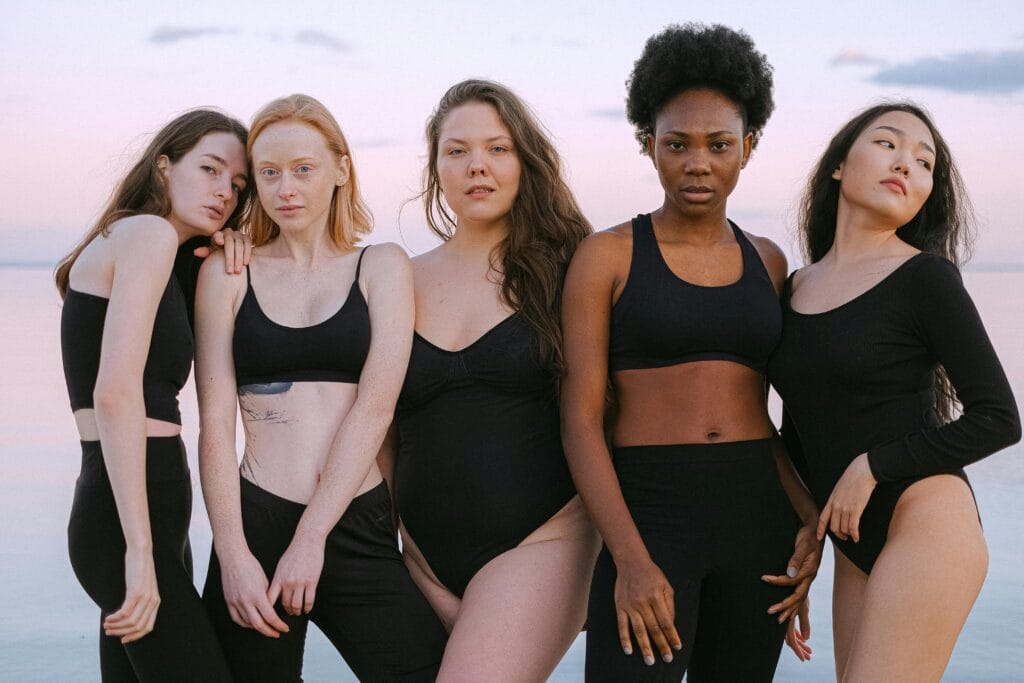
FIND YOUR BODY TYPE
Learn how to dress for your body type and choose clothes that flatter your proportions.
Now that you understand the psychological principles behind why certain outfits just look better, you can start applying them immediately with the clothes you own.
I’d love to hear what resonates with you and what you’re going to change in how you approach getting dressed.
For more styling tips, outfit ideas, and practical advice on looking polished and confident, subscribe to my free newsletter.
Leave a Little Love!
If this post helped you, you can support my work with a small tip.❤️